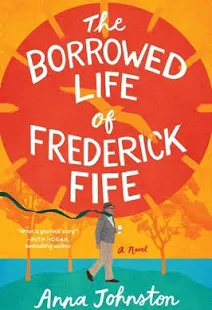
The Borrowed Life of Frederick Fife: Summary, Characters, Review & Book Club Questions
Some books are built around huge mysteries, dangerous worlds, or shocking twists.
The Borrowed Life of Frederick Fife by Anna Johnston begins with something much simpler:
An 82-year-old man is lonely, broke, recently widowed, and about to lose his home.
Then he accidentally gets mistaken for someone else.
And suddenly he has somewhere to live, people around him, three meals a day—and something he thought he had lost forever:
a chance to belong.
What begins as an almost absurd case of mistaken identity becomes a funny, tender story about aging, grief, forgiveness, second chances, and the families we create when the ones we expected don’t work out quite as planned.
If you’re looking for The Borrowed Life of Frederick Fife summary, characters, review, ending explained, or book club questions, here’s everything to know.
The Borrowed Life of Frederick Fife at a Glance
| Author | Anna Johnston |
| Genre | Contemporary / literary fiction |
| Originally published | 2024 |
| Main character | Frederick “Fred” Fife |
| Setting | Australia |
| Major themes | Found family, aging, grief, forgiveness, loneliness, second chances |
| Overall vibe | Funny, bittersweet, warm and ultimately uplifting |
| Good for book clubs? | Absolutely |
The publisher describes the novel as a story about mistaken identity, grief, forgiveness, redemption, and finding family, while Publishers Weekly calls it a hopeful “last act” story that balances the realities of aging and grief with Fred’s humor and kindness.
What Is The Borrowed Life of Frederick Fife About?
Frederick Fife is 82 years old.
His beloved wife, Dawn, has died. Money is running out. He’s facing eviction, and there is essentially no one left in his life to turn to.
Then Fred encounters an elderly man sitting alone in a wheelchair during a nursing-home outing.
The man, Bernard Greer, is dead.
Fred tries to help.
Instead, a bizarre series of accidents ends with Bernard disappearing into the river—and Fred being mistaken for him.
The two men look remarkably alike, Bernard had dementia, and the overwhelmed nursing-home staff assume Fred is simply confused when he insists that he isn’t Bernard.
Soon Fred finds himself inside Bernard’s nursing home.
He has a bed.
Food.
People around him.
And, for the first time since Dawn died, a reason to get up in the morning.
What Fred initially sees as a temporary misunderstanding becomes increasingly difficult to leave behind as he forms friendships with the residents and begins learning about the painful life of the man whose identity he has accidentally borrowed.
The Borrowed Life of Frederick Fife Summary
Spoiler-light summary
Fred begins the novel almost completely alone.
Losing Dawn left him without the person who had anchored his life, and his worsening financial situation eventually leaves him facing homelessness.
His accidental arrival at the nursing home changes everything.
The staff believe he’s Bernard Greer, an existing resident whose dementia makes his apparent confusion believable. Fred initially tries to explain the mistake—but once he realizes that staying gives him shelter and companionship, he allows the misunderstanding to continue.
And Fred being Fred, he doesn’t simply accept his new life.
He starts making it better.
He forms a friendship with Albert, a resident with dementia who believes Fred is his long-lost brother.
He gets to know the other residents.
He notices the struggles of Denise, one of the nursing-home caregivers.
And then he learns that Bernard has an estranged daughter:
Hannah Greer.
Hannah has every reason to resent her father.
Bernard withdrew from his family after the devastating illness and death of Hannah’s sister, Sadie, and his grief eventually contributed to gambling problems and his abandonment of the family.
When Hannah returns and encounters the man she believes is her father, she discovers something unexpected.
“Bernard” is different.
He’s warm.
He’s interested in her.
He listens.
He offers exactly the kind of fatherly love she spent her childhood wishing Bernard would give her.
Of course, the man doing those things isn’t Bernard at all.
It’s Fred.
And eventually Fred has to confront the question at the center of the entire novel:
Can something good still be good if it began with a lie?
The Borrowed Life of Frederick Fife Review
The premise sounds like it could easily become ridiculous.
An elderly man is mistaken for a dead nursing-home resident, everyone ignores his attempts to explain the error because they assume he has dementia, and he eventually decides to stay.
But the mistaken-identity plot isn’t really what the book is about.
It’s the mechanism Anna Johnston uses to explore something much more interesting:
What happens when people begin to feel invisible simply because they’ve gotten older?
Fred doesn’t suddenly discover that he wants wealth, adventure, or excitement.
He wants connection.
He wants someone to notice when he enters a room.
He wants to be useful to someone.
He wants to love people again.
And that makes the book’s central deception unusually complicated.
Fred knows taking Bernard’s identity is wrong.
But the longer he stays, the more good he seems to create.
People become happier because Fred is there.
Residents have someone listening to them.
Denise has someone noticing that she’s struggling.
Hannah gets a version of the father-daughter relationship she was denied.
And Fred finally has people to care about again.
The question isn’t really whether impersonating Bernard is morally acceptable.
It isn’t.
The more interesting question is whether a dishonest beginning can lead to something emotionally true.
That tension gives what could have been a purely cute story considerably more substance.
Johnston also has direct experience with aged care. She changed career paths after her grandfather Fred was diagnosed with dementia and worked as the social-support coordinator at his nursing home. She has said the fictional Fred isn’t a copy of her grandfather, but his kindness and ability to make people feel seen strongly influenced the character.
The result is a novel that treats its older characters as people who are still living, rather than simply characters waiting at the end of life.
That may be the most important thing the book gets right.
Main Characters in The Borrowed Life of Frederick Fife
Your Keyword Planner showed significant search interest specifically around the characters, and that makes sense because this is very much a character-driven story.
Frederick “Fred” Fife
Fred is the 82-year-old widower at the center of the novel.
He’s kind, empathetic, funny, and almost painfully considerate of other people.
After Dawn’s death and his financial collapse, Fred has almost nothing left materially—but he still has an enormous capacity to care for people.
His decision to remain at the nursing home under Bernard’s identity creates the novel’s central ethical conflict.
Fred isn’t pretending because he wants Bernard’s money or status.
At first, he simply needs somewhere to survive.
Eventually, though, what keeps him there is belonging.
Bernard Greer
Bernard is the man whose life Fred accidentally borrows.
Although Bernard dies at the beginning of the story, his presence hangs over almost everything that follows.
Through letters, memories, Hannah’s childhood, and conversations with people who knew him, we gradually learn that Bernard was consumed by grief following the illness and death of his daughter Sadie.
His grief turned into anger, withdrawal, and gambling.
Eventually he abandoned his surviving daughter, Hannah.
But Bernard’s story becomes more complicated as evidence emerges that he regretted what he’d done and had attempted, however imperfectly, to make amends.
Hannah Greer
Hannah is Bernard’s estranged adult daughter.
As a child, she watched her sister Sadie become seriously ill while her parents became consumed by grief and fear.
After Sadie’s death, Bernard emotionally disappeared from Hannah’s life and eventually left the family entirely.
As an adult, Hannah is pregnant and struggling financially when she reconnects with the man she believes is her father.
The sudden warmth she receives from “Bernard” makes her question years of anger without erasing the damage her actual father caused.
Denise Simms
Denise is one of the nursing-home caregivers—and the person most likely to figure out that something about the suddenly charming Bernard isn’t right.
She’s also struggling badly in her personal life.
Her marriage is falling apart, her daughter needs significant support, and Denise begins using alcohol to cope with the pressure.
Fred notices what other people often miss: Denise isn’t simply difficult or irritable.
She’s overwhelmed.
Their relationship becomes another example of Fred’s ability to see the person underneath someone else’s behavior.
Albert
Albert is a nursing-home resident living with dementia.
He believes Fred is his brother, and Fred eventually forms a genuine friendship with him rather than constantly correcting his confused memories.
Their relationship reinforces one of the book’s central ideas:
Sometimes the emotional truth of a relationship matters just as much as the factual details surrounding it.
What Genre Is The Borrowed Life of Frederick Fife?
The Borrowed Life of Frederick Fife is best described as contemporary feel-good fiction with literary and humorous elements.
Penguin categorizes it as contemporary and general/literary fiction, while the U.S. edition has also been categorized around friendship, family life, humor, and literary fiction.
If you enjoy books like:
A Man Called Ove
Remarkably Bright Creatures
The Storied Life of A.J. Fikry
this is very much in that emotional neighborhood.
It deals with difficult subjects, but its goal isn’t to leave you devastated.
It’s trying to remind you that connection can still appear in unexpected places.
Is The Borrowed Life of Frederick Fife Sad?
Yes.
But I wouldn’t call it a sad book.
I would call it bittersweet and ultimately uplifting.
The novel deals with:
grief after losing a spouse, loneliness, dementia, aging, addiction, family estrangement, serious childhood illness, death, pregnancy loss, and the fear of becoming invisible as you age.
Those aren’t light subjects.
But Johnston consistently balances them with humor, friendship, small acts of kindness, and the possibility of second chances.
Publishers Weekly similarly notes that the book places painful realities of grief and aging beside Fred’s humor and arrives at a convincingly hopeful conclusion.
So yes, this is probably a book that can make you cry.
But they’re much more likely to be warm, cathartic tears than “why did I do this to myself?” tears.
Is The Borrowed Life of Frederick Fife Based on a True Story?
No—the Frederick Fife story itself is fictional.
But it has a very real emotional foundation.
Anna Johnston worked in aged care after her grandfather Fred was diagnosed with dementia. She became the social-support coordinator at his nursing home so she could spend more time with him.
Johnston has said that fictional Fred was inspired by her grandfather’s kindness, humor, empathy, and ability to make other people feel seen.
She later channeled those experiences working with older adults into the novel.
So the mistaken-identity plot is fictional.
The humanity behind it isn’t.
Themes in The Borrowed Life of Frederick Fife
One of the strongest themes is found family.
Fred starts the novel believing the family portion of his life is over.
He and Dawn never had the child they desperately wanted.
Dawn is gone.
Fred is alone.
Yet by entering someone else’s life, he somehow finds people who need the enormous amount of love he still has to give.
The story also explores aging and visibility.
Fred and the nursing-home residents aren’t treated as people whose meaningful lives have ended. They still form friendships, fall in love, joke, argue, grieve, help one another, and change.
Another major theme is forgiveness without pretending the damage never happened.
Hannah’s relationship with Bernard is painful for legitimate reasons.
Understanding why Bernard failed his family doesn’t magically make those failures acceptable.
But understanding can still create room for healing.
And finally, there is the ethics of deception.
Fred’s lie helps people.
It’s still a lie.
The book continually asks how those two truths can exist at the same time.
The Borrowed Life of Frederick Fife Ending Explained
MAJOR SPOILERS BELOW
If you haven’t finished the book yet, stop here.
Everything after this section discusses how Fred’s deception is revealed and how the story ends.
Fred eventually discovers that Bernard had accumulated a substantial amount of money and placed it into a trust for Hannah.
The problem is that Hannah cannot fully receive what Bernard intended for her while Bernard is supposedly still alive.
And because everyone believes Fred is Bernard, Fred’s borrowed life is now preventing Hannah from receiving something her actual father tried to leave behind for her.
That forces Fred to finally make the decision he’s been avoiding.
He tells the truth.
Fred writes a confession explaining who he really is and what happened with Bernard.
His impersonation comes to an end, and police become involved.
But Hannah ultimately understands that Fred wasn’t trying to steal Bernard’s life for financial gain.
He gave her something Bernard had been unable to give her:
the experience of being loved by a father.
Hannah chooses not to pursue Fred as someone who deliberately harmed her.
At Bernard’s funeral, the complicated truth of both men comes together.
Bernard failed Hannah terribly, but he also regretted those failures.
Fred lied to Hannah, but the love he gave her was genuine.
Ultimately, Hannah asks Fred to remain part of her life.
Fred ends the story no longer borrowing Bernard’s family.
He has become part of one of his own.
The epilogue shows Fred living with Hannah and her daughter, Dawn Sadie Greer, whose name connects Fred’s beloved wife Dawn with Hannah’s late sister Sadie.
What Does the Ending Mean?
The title changes meaning by the end of the novel.
Fred believes he’s borrowing Bernard’s life.
But what he actually does is repair pieces of several lives—including his own.
Bernard’s identity gives Fred access to a family.
Fred’s kindness gives Hannah an opportunity to experience the relationship she always wanted.
And Fred’s eventual honesty allows Bernard’s final attempt to provide for Hannah to reach her.
The ending suggests that belonging isn’t necessarily determined by biology.
Fred didn’t become Hannah’s father because people confused him with Bernard.
He became a father figure because of what he did after entering her life.
Is The Borrowed Life of Frederick Fife Worth Reading?
If you enjoy heartwarming books with older protagonists, found family, humor, grief, and second chances, yes.
This isn’t a book driven by action.
It works because you care about the people.
Fred is the kind of character who makes kindness interesting.
And there’s something refreshing about reading a story where the central character is 82 and the novel treats that age not as the end of his story—
but the beginning of another chapter.
The Borrowed Life of Frederick Fife Book Club Questions
- Was Fred justified in allowing the nursing home to believe he was Bernard? At what point, if any, did his decision become unethical?
- Would your opinion of Fred change if he had benefited financially from assuming Bernard’s identity? Why?
- How does the novel challenge assumptions about aging and life in a nursing home?
- Bernard caused real harm to Hannah, but the novel gradually reveals the grief behind many of his choices. Does understanding someone’s behavior make forgiveness easier—or should some actions remain unforgivable?
- Fred gives Hannah the fatherly relationship Bernard never did. What actually makes someone family: biology, history, love, responsibility, or something else?
- How does Fred’s grief over Dawn affect the choices he makes after entering the nursing home?
- Compare Fred and Bernard. They physically resemble one another, but how are their responses to grief and loss different?
- Denise initially seems suspicious and difficult. How does learning about her personal struggles change the way you understand her behavior?
- The book repeatedly shows people feeling unseen—Fred, nursing-home residents, Hannah, Denise, and even Bernard. Which character’s loneliness affected you most?
- What do you think the title The Borrowed Life of Frederick Fife means by the end of the novel? Is Fred really borrowing Bernard’s life, or creating a new one of his own?
These are better for a book club than simple factual questions because they get into the ethical and emotional issues underneath the plot.
Books Like The Borrowed Life of Frederick Fife
If you finish Fred’s story and want another warm, character-driven novel about loneliness, connection, and unexpected family, I’d try:
A Man Called Ove by Fredrik Backman — for an older protagonist whose life changes through unexpected human connection.
Remarkably Bright Creatures by Shelby Van Pelt — for grief, loneliness, found family, and a wonderfully unusual friendship.
The Storied Life of A.J. Fikry by Gabrielle Zevin — for second chances and a lonely person unexpectedly building a family.
The Brilliant Life of Eudora Honeysett by Annie Lyons — for another older protagonist discovering that meaningful relationships can arrive surprisingly late in life.
How the Penguins Saved Veronica by Hazel Prior — for an older, prickly protagonist whose life expands through unexpected relationships.
Final Thoughts
The Borrowed Life of Frederick Fife starts with a lie.
But it’s really a story about truth.
The truth that loneliness matters.
The truth that grief can change people in ways they never intended.
The truth that getting older doesn’t eliminate the need to be loved, useful, noticed, or needed.
And the truth that sometimes family isn’t simply something you’re born into.
Sometimes it’s something you find.
Fred enters the nursing home because he has nowhere else to go.
He stays because, for the first time in a long time, people need him.
And somewhere along the way, the life he thinks he’s borrowing becomes a life worth living again.