
The Emperor of Gladness by Ocean Vuong: Review, Summary & Themes
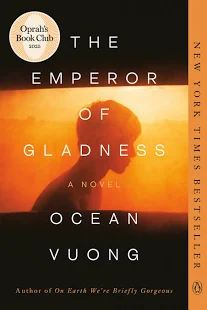
The Emperor of Gladness by Ocean Vuong: Review, Summary & Themes
The Emperor of Gladness by Ocean Vuong is the kind of novel that asks you to pay attention to people the world very easily overlooks.
Set in the fictional town of East Gladness, Connecticut, the story begins with nineteen-year-old Hai standing on a bridge, ready to end his life.
An elderly woman named Grazina sees him and calls out.
That small interruption becomes the beginning of an unexpected relationship—and a novel about work, loneliness, caregiving, addiction, memory, family and the small connections that can keep someone moving forward.
Vuong’s second novel was published in 2025 and was selected for Oprah’s Book Club; its paperback edition followed in July 2026.
What Is The Emperor of Gladness About?
After Grazina stops Hai from jumping, he begins staying with her and helping care for her as she experiences dementia.
Hai is struggling with his own past and uncertain future, while Grazina’s memories move between the present and experiences from decades earlier.
Hai eventually finds work at a restaurant, where another group of imperfect people gradually becomes part of his world.
There isn’t one giant adventure driving the novel.
Instead, the story is built around people caring for one another while trying to survive ordinary lives that are often much harder than they appear.
My Review of The Emperor of Gladness
This is not a novel I’d recommend to someone looking for a fast plot.
Its power is elsewhere.
Vuong is interested in people: the things they remember, the stories they tell about themselves, the repetitive work they perform, the people they disappoint and the unexpected relationships that become important.
There is sadness throughout the book, but it isn’t only a sad novel.
There is humor, absurdity, tenderness and genuine warmth mixed into lives that could easily have been written only as tragic.
Hai and Grazina’s Relationship
The relationship between Hai and Grazina gives the novel much of its emotional center.
They are separated by age, history and experience, but each is living somewhat outside the world around them.
Hai begins caring for Grazina physically, while their relationship gives him something equally important: another reason to remain connected to life.
Neither one magically fixes the other.
That is part of what makes their relationship meaningful.
The Importance of Work
One of the more unusual aspects of The Emperor of Gladness is how much attention it gives to ordinary labor.
Restaurant work, caregiving, repetitive tasks and working-class lives aren’t just background details.
They’re central to the story.
The novel asks us to look at people who might ordinarily disappear into the scenery of someone else’s day and recognize the enormous inner lives happening there. Contemporary reviews have similarly highlighted the novel’s focus on labor, poverty, immigrants, outsiders and chosen community.
Major Themes in The Emperor of Gladness
A few themes run strongly throughout the book:
- Chosen family
- Caregiving
- Addiction and survival
- Memory
- Immigrant identity
- Working-class life
- Loneliness
- The stories we tell ourselves
- Small acts of kindness
The title itself begins to feel increasingly meaningful as the story goes on.
Gladness here isn’t a permanent state of happiness.
Sometimes it is simply a brief moment of connection inside a life that remains difficult.
Who Should Read The Emperor of Gladness?
I’d recommend it to readers who enjoy:
- Literary fiction
- Character-driven novels
- Beautiful prose
- Found-family stories
- Books about caregiving
- Working-class characters
- Quiet but emotionally intense stories
If you’re looking for plot twists every twenty pages, this probably isn’t the right book.
If you enjoy novels that make seemingly ordinary moments feel enormous, it may be.
Final Thoughts
The Emperor of Gladness isn’t really about escaping hardship.
It’s about the strange, imperfect ways people learn to live inside it.
Hai doesn’t discover a completely different world. He begins discovering people within the world he already inhabits.
And perhaps that’s where the novel finds its version of gladness—not in everything suddenly becoming good, but in realizing that even in difficult circumstances, people can still matter enormously to one another.