Everything Is Tuberculosis by John Green: Review, Summary & Why It Matters
Everything Is Tuberculosis by John Green: Review, Summary & Why It Matters
There are some nonfiction books that teach you about a subject, and then there are books that completely change the way you see it.
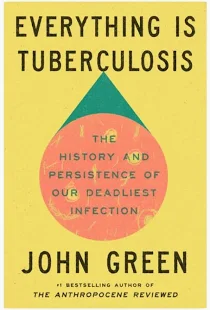
Everything Is Tuberculosis: The History and Persistence of Our Deadliest Infection by John Green takes a disease many of us think belongs largely to the past and shows just how present—and preventable—its devastation still is.
Green combines the history and science of tuberculosis with the story of Henry Reider, a young man he met at a tuberculosis hospital in Sierra Leone in 2019. The result is a remarkably human look at medicine, poverty, inequality, and the decisions that determine who has access to lifesaving treatment. The book was published in March 2025 and runs just over 200 pages, making it a surprisingly approachable introduction to an enormous subject.
What Is Everything Is Tuberculosis About?
At first glance, the title sounds like this might be a straightforward medical history.
It isn’t.
Green does explain how tuberculosis has affected humanity for centuries, how our understanding of the disease changed, and how effective treatments eventually became available.
But the much larger question running through the book is this:
If tuberculosis is preventable and treatable, why does it still kill so many people?
That question takes the book beyond medicine.
Green looks at poverty, nutrition, healthcare systems, drug availability, economics, stigma, and the enormous differences between experiencing tuberculosis in a wealthy country and experiencing it somewhere with fewer medical resources.
Henry Reider’s story gives those larger issues a human face rather than reducing tuberculosis to statistics.
My Review of Everything Is Tuberculosis
One of the strongest things about this book is how accessible it is.
You don’t need a background in medicine, global health, or science to understand what Green is talking about. He has a talent for taking something complicated and explaining it conversationally without making the subject feel trivial.
And despite the title, this isn’t really only a book about tuberculosis.
It’s about who gets sick, who gets treated, whose suffering receives attention, and why having a cure doesn’t necessarily mean everyone gets access to it.
That is what gives the book its emotional weight.
The history is fascinating, but the individual lives behind that history are what make the information difficult to forget.
What I Liked About the Book
I especially appreciated the balance between information and storytelling.
A book filled entirely with medical history could easily become overwhelming. A book based entirely around one patient’s experience could lose some of the larger context.
Green manages to bring the two together.
The scientific and historical information helps explain Henry’s circumstances, while Henry’s story continually reminds you why those larger systems matter.
It’s also the kind of nonfiction book that can make you realize how little you knew about something you assumed you understood.
Is Everything Is Tuberculosis Worth Reading?
I think it is particularly worth reading if you enjoy nonfiction that uses individual stories to explore much larger issues.
Readers who enjoyed books about public health, history, inequality, medicine, or global development will find plenty here, but you don’t need to normally read those subjects to appreciate it.
It’s short, readable, compassionate, and likely to leave you thinking about tuberculosis very differently than you did before opening it.
Who Should Read Everything Is Tuberculosis?
This would be a good choice for readers who enjoy:
- Accessible nonfiction
- Medical and scientific history
- Global health
- Books about inequality and social justice
- Narrative nonfiction centered on real people
- John Green’s conversational style
Final Thoughts
The most unsettling thing about Everything Is Tuberculosis isn’t learning how devastating tuberculosis has been throughout history.
It’s realizing how much devastation continues even though humanity already possesses many of the tools needed to prevent it.
That turns what could have been a history of disease into something much more immediate: a book about the choices we make about whose health matters.