
The Wife, the Maid and the Mistress: Book Review, True Story, Characters & Ending Explained
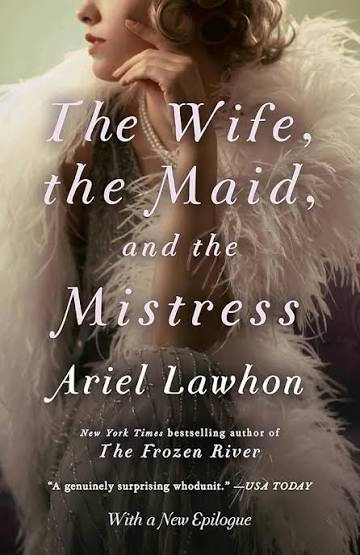
A New York Supreme Court judge walks out of a Manhattan restaurant one summer night in 1930 and seemingly disappears from the face of the earth.
No confirmed sightings. No body. No definitive explanation.
And almost a century later, the disappearance of Judge Joseph Force Crater remains unsolved.
In The Wife, the Maid and the Mistress, Ariel Lawhon takes that real-life mystery and asks a much more interesting question than simply Where did Judge Crater go?
What if the women around him knew more than anyone realized?
Told primarily through Stella Crater, the judge’s wife; Maria, his maid; and Ritzi, a Broadway showgirl connected to him, the novel mixes historical fiction, murder mystery, Jazz Age New York, political corruption, organized crime, and three women trying to survive in a world controlled largely by powerful men.
If you’re looking for a The Wife, the Maid and the Mistress book review, the true story behind Judge Crater, a character guide, historical background, or the ending explained, here’s everything to know.
BUY ON AMAZON
BUY AT BOOKSHOP.ORG
The Wife, the Maid and the Mistress at a Glance
| Author | Ariel Lawhon |
| Published | 2014 |
| Genre | Historical fiction / historical mystery / suspense |
| Setting | New York City, primarily 1930–1931 |
| Based on a true story? | Yes, but heavily fictionalized |
| Central mystery | The disappearance of Judge Joseph Crater |
| Main characters | Stella Crater, Maria Simon, Sally Lou “Ritzi” Ritz |
| Best for | Historical mystery, true-crime and The Frozen River fans |
| Book club pick? | Yes |
Penguin Random House categorizes the novel as historical fiction, mystery and thriller, and describes it as a fictional reimagining of the real disappearance that captivated the country in 1930.
What Is The Wife, the Maid and the Mistress About?
On August 6, 1930, Judge Joseph Crater disappears.
Lawhon tells the story largely through three women living in very different parts of New York society.
Stella Crater is his sophisticated wife, expected to maintain appearances despite knowing considerably more about her husband than she lets on.
Maria Simon works as the Craters’ maid while also trying to protect her husband Jude, a newly promoted NYPD detective whose career may have benefited from political favors.
And Sally Lou “Ritzi” Ritz is a Broadway chorus girl entangled with Crater and with the much more dangerous men operating behind New York’s nightlife.
Each woman has a reason to keep quiet.
Each knows only part of what happened.
And as the timelines and secrets begin connecting, it becomes clear that Crater’s disappearance may have involved far more than one missing judge.
The official reader’s guide places the women against a backdrop of Tammany Hall corruption, organized crime, speakeasies, showgirls and the political scandals swirling around Crater when he vanished.
The Wife, the Maid and the Mistress Book Review
What makes this novel interesting isn’t really Judge Crater.
It’s the women the historical record left standing around him.
That’s a smart choice.
A straightforward fictional solution to an unsolved crime could easily become little more than a historical whodunit. Instead, Lawhon uses the mystery as a framework for exploring how much power women could exercise in 1930s New York when most official power belonged to men.
Stella has social position but very little independence.
Maria has intelligence and competence but is constrained by class, gender and her husband’s career.
Ritzi has access to influential men—but that access makes her vulnerable to them rather than truly powerful.
The story becomes increasingly interesting when those women begin using the limited power available to them.
The setting also does a lot of work. This is a New York filled with smoky clubs, backstage dressing rooms, political favors, corrupt cops, gangsters, whiskey and whispered deals. Penguin Random House specifically highlights the novel’s movement through Jazz Age clubs, Broadway backstage spaces and the shadowy Art Deco city.
And because the central mystery actually happened, there’s always a second layer running underneath the novel:
How much of this could have happened?
The answer is complicated—which is also what makes the book fun to research after finishing it.
What worked especially well
For me, the strongest element is the relationship among Stella, Maria and Ritzi.
They begin in completely different positions and have every reason to distrust one another.
But the novel gradually turns their shared vulnerability into a source of power.
The nonlinear timeline also works well for a mystery. Lawhon gives you pieces of information long before you understand why they matter. By the final chapters, earlier conversations and decisions take on very different meanings.
This is also a good choice if you liked Ariel Lawhon’s The Frozen River but want something more noir-like and urban. Both use historical gaps as a place for fiction to ask what might have happened, but The Wife, the Maid and the Mistress feels much more like a Jazz Age crime story.
Is The Wife, the Maid and the Mistress Based on a True Story?
Yes—but it’s important to separate the real Judge Crater mystery from Ariel Lawhon’s fictional solution.
Joseph Force Crater was a real New York Supreme Court justice.
Governor Franklin D. Roosevelt appointed him to the bench in April 1930. A few months later, on August 6, 1930, the 41-year-old judge disappeared in Manhattan. His case became a national sensation, and newspapers eventually dubbed him the “missingest man in New York.”
Crater really did have connections to New York politics and the powerful Tammany Hall machine.
He really did withdraw thousands of dollars shortly before vanishing.
He really did dine on the final evening with attorney William Klein and showgirl Sally Lou Ritz.
And he really was never conclusively found.
But the novel’s explanation for what happened is fiction.
No one has proven who killed Crater—or even conclusively proven that he was murdered.
What Happened to Judge Crater in Real Life?
The short answer:
Nobody knows.
On August 6, Crater handled several unusual financial and business matters, including withdrawing a large sum of money. That evening he had dinner in Manhattan with William Klein and Sally Lou Ritz.
Afterward, his trail disappears.
Early reports suggested Crater left in a taxi, although later accounts from Klein and Ritz changed, saying that Crater walked away from the restaurant instead. No confirmed sighting followed.
The possibilities debated over the years included voluntary disappearance, political corruption, organized crime, a romantic scandal and murder.
Crater was officially declared legally dead in 1939.
Then, decades later, another strange development surfaced.
In 2005, authorities revealed a note left by a woman who claimed her late husband had known that Crater was murdered and buried beneath the Coney Island boardwalk. But the claim could not be verified, and the relevant area had been heavily excavated decades earlier during construction of the New York Aquarium.
So despite generations of theories:
Judge Crater’s real disappearance remains unsolved.
The Real Women Behind the Novel
This is where the history gets particularly interesting.
Stella Crater — The Wife
Stella was real.
She was married to Joseph Crater and spent decades living with the mystery surrounding his disappearance.
One of the details that originally fascinated Ariel Lawhon was Stella’s annual ritual.
According to accounts repeated by Lawhon and contemporary reporting, Stella returned each year on August 6 to a Greenwich Village bar, ordered two drinks, toasted her missing husband and left his drink untouched.
She continued the ritual until her death in 1969.
Lawhon has said that image stayed with her for years and eventually became the seed from which the novel grew.
Maria Simon — The Maid
Maria is fictionalized, but Crater really had a maid.
Lawhon later explained that the historical maid appeared in the record as Amedia Christian and that she changed the woman’s name for the novel. The historical record surrounding the maid was extremely thin, giving Lawhon considerable room to construct Maria’s life and role in the story.
So Maria shouldn’t be read as a factual biography of the real maid.
She is a fictional character inspired by a real person who existed on the edges of the Crater case.
Sally Lou “Ritzi” Ritz — The Mistress
Sally Lou Ritz was also real.
She really was a showgirl who had dinner with Crater on the evening he disappeared and was widely rumored to have been romantically involved with him.
There’s an especially fascinating postscript.
After the novel was published, Lawhon received an email from a woman explaining that Sally Lou Ritz had been her grandmother.
Lawhon had assumed during her research that the real Ritz had died young or disappeared permanently. Instead, Ritz survived, had a family and lived for decades after the events surrounding Crater’s disappearance.
That is exactly the kind of strange real-life twist that makes this book particularly fun to research.
Main Characters in The Wife, the Maid and the Mistress
Stella Crater is Judge Crater’s wife and perhaps the novel’s most controlled character. She understands the importance of appearances in political New York but gradually reveals herself to be far more calculating and capable than the men around her assume.
Maria Simon is the Craters’ maid and a skilled seamstress. Her husband Jude’s promotion to detective ties their family to the same political machine Maria increasingly distrusts. She becomes caught between protecting her marriage and confronting what she knows.
Sally Lou “Ritzi” Ritz is a Broadway chorus girl whose association with Crater places her dangerously close to organized crime. She is ambitious but also acutely aware that powerful men can discard her when she becomes inconvenient.
Joseph “Joe” Crater is the missing judge at the center of everything. In the novel, he is corrupt, unfaithful and increasingly trapped by debts and political obligations.
Jude Simon is Maria’s husband and an NYPD detective assigned to the Crater investigation. His relationship with Maria gives the novel one of its more emotionally grounded marriages.
Owney Madden is a gangster with enormous influence over New York nightlife and several of the characters surrounding Crater.
Several of these figures—including Crater, Stella, Ritz, Madden and William Klein—were real historical people, while Lawhon takes substantial fictional liberties with their private conversations, motives and relationships.
How Historically Accurate Is The Wife, the Maid and the Mistress?
Think of it as:
real mystery + real people + real political environment + fictional solution.
The historical framework is genuine.
Judge Crater disappeared.
Stella existed.
Sally Lou Ritz existed.
Tammany Hall corruption was real.
Owney Madden was real.
The Seabury investigations into municipal corruption were real.
But Lawhon invents the private conversations, alliances, motivations and conspiracy tying these pieces together.
That distinction matters because the ending is convincing enough that it would be easy to finish the book believing Lawhon has revealed an actual solution to the Crater case.
She hasn’t.
She has created one plausible fictional answer to an unsolved historical mystery.
The author herself has written about the responsibility of fictionalizing real people, noting that even when the historical record supports a darker portrayal, those people and their families deserve to be treated with dignity.
Major Themes in The Wife, the Maid and the Mistress
One of the strongest themes is female solidarity.
Individually, Stella, Maria and Ritzi have limited power against judges, gangsters, police officers and political bosses.
Together, the equation changes.
The novel is also deeply interested in appearance versus truth.
Marriages aren’t what they look like.
Careers are bought through favors.
Respectable judges socialize with gangsters.
Police officers serve political interests.
And nearly everyone involved in Crater’s disappearance is performing one version of themselves publicly while hiding another privately.
Finally, there’s the question of who gets remembered by history.
Judge Crater became famous because he vanished.
The women around him largely became footnotes.
Lawhon reverses that arrangement by placing those women at the center and making the famous man almost the object orbiting their stories.
The Wife, the Maid and the Mistress Ending Explained
MAJOR SPOILERS BELOW
If you haven’t finished the book, stop here.
The rest of this section reveals Lawhon’s fictional explanation for Judge Crater’s disappearance.
The novel ultimately reveals that Stella, Maria and Ritzi all played roles in setting events in motion against Joe Crater.
Stella reaches the point where she openly wishes Joe dead and proposes that the three women work together. Maria participates reluctantly, largely because of threats surrounding Jude’s career, while Ritzi helps feed information into the network surrounding Crater.
Their goal isn’t presented as the three women personally murdering him.
Instead, they help place Crater in the path of people who have powerful reasons to silence him.
Ritzi later witnesses the critical events.
She hides while Crater meets with gangster Owney Madden. Crater owes money and may possess dangerous information connected to political corruption. Madden makes clear that he cannot risk Crater talking.
The plan goes wrong when circumstances take Crater and Ritzi to Coney Island.
Crater is ultimately killed, and Ritzi later writes Stella a confession explaining what she witnessed and how the women’s actions contributed to the events.
Did Stella Know What Happened?
Yes.
Within the novel, Stella eventually receives Ritzi’s written confession and knows the truth about Crater’s fate.
That knowledge completely changes the meaning of Stella’s annual public ritual of drinking to her missing husband.
It isn’t simply mourning.
It becomes partly penance.
She knows he isn’t coming back.
Does Jude Solve the Crater Case?
Essentially, yes.
Decades later, Stella gives Jude the evidence that finally allows him to understand what happened.
But that evidence also implicates Maria.
Jude chooses to protect his late wife rather than reveal the truth.
He burns Ritzi’s letter.
The epilogue goes even further.
Jude traces an unidentified body recovered beneath a Coney Island pier and becomes convinced it was Crater. He then destroys the remaining records, ensuring that the official mystery stays unsolved.
Again, this is Lawhon’s fictional ending, not the established historical solution to the real Judge Crater case.
What Does the Ending Mean?
The cleverest part of the ending is that the novel technically leaves history exactly where it found it.
Judge Crater is still missing.
The public still doesn’t know what happened.
The official case still has no answer.
But the reader does.
Lawhon creates a hidden history underneath the documented one.
It also completes the novel’s argument about power.
For most of the story, women are expected to remain silent, maintain appearances and absorb the consequences of men’s decisions.
By the end, Stella, Maria and Ritzi have exerted enormous influence over events—yet history barely notices them.
The men get headlines.
The women keep the secrets.
Is The Wife, the Maid and the Mistress Worth Reading?
I’d recommend it especially if you like historical fiction that feels like a mystery rather than a history lesson.
It should work particularly well for readers who enjoy:
Ariel Lawhon’s other historical novels, true-crime-inspired fiction, Jazz Age New York, political corruption, strong female perspectives and mysteries based on unresolved historical events.
It’s also the kind of novel where I’d recommend doing something immediately after finishing:
Google Judge Crater.
Finding out which details were real makes the fictional story even more interesting.
The Wife, the Maid and the Mistress Book Club Questions
- Did you know Judge Crater was a real person before reading the book? How did knowing the mystery was real change your experience of the novel?
- Which of the three women—Stella, Maria or Ritzi—did you find most compelling?
- Were Stella, Maria and Ritzi justified in taking action against Crater, even knowing how dangerous the consequences could become?
- How does the novel show the difference between formal power and informal influence for women in the 1930s?
- How did your opinion of Stella change from the beginning of the book to the end?
- The novel repeatedly forces characters to choose between truth and protecting someone they love. Which characters make the right choice?
- What role does political corruption play in the novel? Could the events have happened without the system surrounding Crater?
- Why do you think Lawhon chose to tell Crater’s story primarily through the women rather than through the judge himself?
- Did the fictional solution to Crater’s disappearance convince you? What do you think happened to the real Judge Crater?
- Does Jude make the right decision when he destroys evidence at the end, or does protecting Maria unfairly deny history the truth?
Penguin Random House also publishes an official reader’s guide centered on many of these same issues, including female power, Stella’s transformation, historical figures and theories about Crater’s disappearance.
Books Like The Wife, the Maid and the Mistress
If you finish this and want another historical mystery, the most obvious next read is Ariel Lawhon’s The Frozen River.
You might also try I Was Anastasia for another Lawhon novel built around a famous historical mystery, The Seven Husbands of Evelyn Hugo if you like glamorous women controlling their own stories, or historical crime novels that mix real events with fictional explanations.
Final Thoughts
The most interesting thing about The Wife, the Maid and the Mistress is that Ariel Lawhon takes one of America’s most famous missing-person mysteries and makes the missing man almost secondary.
Instead, the story belongs to the women left behind.
Stella.
Maria.
Ritzi.
Women who are underestimated because of their gender, class or position—and who understand considerably more about the world around them than the men in power realize.
Judge Crater really disappeared.
The mystery really did consume the country.
And we still don’t know what actually happened.
But for a few hundred pages, Lawhon gives us one very entertaining possibility.
And once you know how strange the real case was, that possibility becomes even more fun to think about.
BUY THE WIFE, THE MAID AND THE MISTRESS ON AMAZON
BUY AT BOOKSHOP.ORG